|


|
 |
Archive for Posts Tagged ‘mad-men’
August 14th, 2009 by Amelia G
The new season of AMC’s Mad Men starts this Sunday. I will be at Vampire-Con, so I’ll be TiVoing it, but I’m looking forward to this new season of one of my favorite shows. Pre-season rumor has it that this time out, Mad Men creator Matthew Weiner has in store more drinking, more gender relations of both the sexual and social issue variety, and will start off a couple more years into the 1960’s.
We’ve got a beautiful Mad Men promo photo gallery for your viewing pleasure here. The colors of past seasons were a bit different from these and I can’t say whether the new season will fully match prior seasons or evolve. I love the look here, though, and one of the most impressive things about Mad Men is the hyper real look and feel. The show’s costuming is convincingly period, but somehow makes each time it covers look more fabulous and glamorous and beautiful than it probably looked at the time. The lighting and color palette is always just gorgeous and makes this one of the few shows I always TiVo at Best Quality, so I don’t miss a bit of the look and feel.
Over on the AMC site, they also have a MadMen Yourself avatar creator. The image above is the one I did for myself. There was no option for iced latte, as it would have been an anachronism in 60’s Madison Avenue, so I opted for a hot coffee. There was no option for purple hair, but I was able to select stripes.
No Comments »
March 11th, 2009 by Forrest Black
I wanted to share this entertaining new video done by the folks over at Funny or Die, featuring Jon Hamm (Mad Men, etc.) as Lex Luthor. Apparently even Lexcorp has over leveraged themselves in these harsh economic times and could really use some Federal assistance. The horrible bald cap just makes it that much funnier, to me anyway, although I was waiting for Pete Campbell or sexy Joan Holloway to join him.
2 Comments »
March 8th, 2009 by Amelia G
Breaking Bad is about choices, consequences, and regret. Breaking Bad is about the importance of learning and the application of wisdom. The second season of Breaking Bad starts at 10pm Sunday March 8. If you have not seen the first season yet, you’ve still got time to catch it on On Demand. The pilot episode from season one is available on AMCTV. The basic plot line has mild-mannered high school chemistry teacher Walt White, played by Bryan Cranston, getting into the drug trade with an assist from an overgrown juvenile delinquent former student Jesse Pinkman, played by Aaron Paul, but the clever and beautiful cinematography and the deft characterization and plotting in the writing and the pitch perfect acting all come together to make Breaking Bad so much more than just a fish out of water story. Not that the fish out of water aspect doesn’t get some terrific laughs. Don’t worry because, in addition to ruminations on the meaning of life and self-determination, Breaking Bad also features funny parts, explosions, and fight scenes. Additionally, Emmy winner and CSI alum Michael Slovis does an incredible job as director of photography with the look and feel of the show.
Some of the most entertaining moments are when the expectation is that one character will handle a situation and it turns out that someone else is better suited. But, when you think about, the less obvious character really does have the better skill set. Jesse is charismatic, intelligent, and witty at first glance, but he is weak and having blown off school has limited his options, even as a meth dealer. Walt is retiring and seems more weak and less charismatic at first glance, but he has a more iron core, the sense of responsibility which comes from his loving if overbearing family, and the strength, freedom, and feeling of being on one’s last chance which come from knowing that his lung cancer is probably a death sentence. A lot of it is contextual. A head shaved for chemo can look small and tragic in one context and badass and not to be trifled with in another. Actor Bryan Cranston, once best known as Hal on Malcom in the Middle, won the Emmy for Outstanding Lead Actor in a Drama Series for his nuanced portrayal of Walter H. White. As things play out, one realizes that Bryan Cranston’s Walt once had a promising and potentially lucrative research career. In the first season, we don’t know yet whether his partners did anything off or if he walked away to start a family or otherwise take the path to a very ordinary life. So, even before finding out he was most likely dying, Walt felt that melancholy creeping sense of being at a stage of life where the questions start sounding less like “what if” and more like “if only”. In a way, the story is about a mid-life crisis ratcheted up to maximum volume, but communicated in a manner which is sympathetic, poetic, and ultimately empowering.
Jesse might be a little lazy and not know his chemistry as well as would be ideal for the local methamphetamine aficionados and he might not be the best at standing up to alpha personalities except in an ineffectual smartass fashion, but he is young and there is clearly potential there. Aaron Paul, as Jesse, and Bryan Cranston play off one another well. The only things I’ve ever seen Aaron Paul in are an episode of CSI and Sleeper Cell where he played Teen #1, but he has guested on like half the shows on television and most notably has an important recurring role on HBO’s Big Love and is appearing in Last House on the Left, directed by Wes Craven which opens this coming week. With Jesse’s character the show becomes not just about middle-aged regrets, but about all the little choices we make all along and all the little deaths by regret we experience. Having the spectrum of Jesse to Walt makes the story very universal.
You can check out Walt, Jesse, Walt’s overbearing but loving wife frustrated writer Skyler White, Skyler’s competitive shoplifer sister Marie, Marie’s super-overbearing macho but well-meaning DEA agent husband Hank Schrader, and Walt and Skyler’s son Walter Jr. who, despite having cerebral palsy, seems far more well-adjusted and content than many of the other characters, on AMC March 8 Sunday at 10pm or later on On Demand. X-Files alum Vince Gilligan created the offbeat Breaking Bad and is credited as having both written and executive produced 20 episodes of the show, so I’m guessing we’ll get to enjoy a third season as well. The other executive producer on the show is Oscar-winner Mark Johnson who has worked on such a large string of hits and great movies that it almost seems like overkill, including Galaxy Quest, Diner, Kafka, Rain man, Donnie Brasco, Home Fries, Narnia, the list goes on.
AMC stands for American Movie Classics because they got their start inexpensively licensing old classic films, but, wow, when AMC decided to get into producing original television, they kicked things off producing two of the best shows ever made by any network with Mad Men and Breaking Bad. I can’t imagine a more impressive start. AMC produced some of the best shows on television last year.
2 Comments »
November 10th, 2008 by Amelia G
After a brief hiatus to make room for election coverage, My Own Worst Enemy returns to airing on NBC tonight after the supposedly revamped Heroes. If you have not checked out this new television vehicle for Christian Slater, you can watch the first three full episodes of MOWE online for free now.
If you like espionage with just a dash of science fiction, you’ll probably enjoy this show. In its general category, My Own Worst Enemy is a lot more fun than MI-5 and a bit less fun than Burn Notice. MOWE also has a bit of an interesting externalized study of the sorts of internal conflicts many people face. Christian Slater stars in MOWE as a super spy who has had a reverse-Manchurian candidate done on him. The norm in this sort of storyline is to have a regular person who is secretly a ticking time bomb of a killer. It makes so much more sense psychologically and just logically to have a multilingual martial artist military guy create a normal guy cover identity. I want someone to give me a chip where I can also live a milquetoast life and communicate with my alter-ego about the pros and cons via cell phone video messages.
The conventional wisdom in Hollywood, for a long time, was that movie stars could not do TV, that a movie star who did TV was finished. With shows like Breaking Bad, The Wire, and Mad Men being so obviously higher quality and more interesting than most movies today, it gets harder to view acting on television as somehow lesser than a role in Saw V or Sex Drive. With an Oscar winner like Anna Paquin starring in True Blood, Alec Baldwin doing a hilariously good job on 30 Rock, and Entourage being practically a who’s who of Hollywood, it is simply more implausible for anyone to claim that television is a step down. The current season of Entourage is ironically somewhat about the conflict actors face when deciding whether they will strive to be cast in movies or television roles.
Nonetheless, there are people saying how Christian Slater has come down in the world if he is starring on an entertaining new spy series on network television. As near as I can tell, a lot of Christian Slater fans first discovered him when he starred in the very very dark (and very very awesome) teen comedy Heathers in 1989. So I’ve seen a ridiculous number of reviews of the show going on and on and on about how Christian Slater has obviously had Botox, like that is a bad thing. Yes, anyone who has spent a significant amount of time watching Christian Slater act will probably be of the opinion that his forehead would not be that smooth without a bit of Botox. He hasn’t overdone it. He is still more than expressive enough to effectively convey two very different personalities, with his acting. If there are some televisions reviewers who are pissed off that they are not aging as well as Christian Slater, here is the link to the Botox site, if you really ever thought you looked like Winona Rider and there was a chance J.D. was going to come to your window and plot murders with you. Good luck. If not, then I recommend just watching the show for its entertainment value and not for beauty tips.
My Own Worst Enemy really is a fun show. I like to contemplate what awful jokes different sides of my general personality would like to play on one another, if they were divided into distinct personalities. MOWE has some cool gadgets too. I like cool gadgets.
12 Comments »
October 26th, 2008 by Amelia G
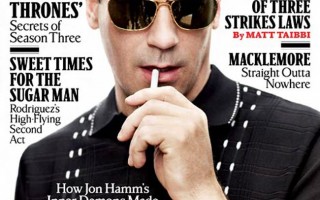
Jon Hamm, who plays leading man Don Draper on AMC’s Mad Men, hosted NBC’s Saturday Night Live last night. It’s kind of peculiar because, although he is a completely plausible womanizer on the show, I’ve never personally found his character on Mad Men particularly sexy. He is extremely compelling and I can relate to some of what he appears to be going through, but he just never struck me as a flavor I’d like. Appearing on SNL really showcased what an incredibly good actor he is. And, curiously, seeing more range made Jon Hamm the actor seem that much hotter.
This was seriously the funniest and best episode of SNL in ages. Even the monologue was laugh-out-loud funny, although probably mostly only if you have been watching Mad Men. Some of the highlights of the show included a mash-up of Mad Men and SNL’s recurring 2 A-Holes characters played by Kristen Wiig and Jason Sudeikis. Elisabeth Moss, who plays copywriter Peggy Olsen on Mad Men, and John Slattery, who plays partner Roger Sterling, also guested for this sketch. Will Forte also played a hilarious adult trick-or-treater knocking on neighbor Jon Hamm’s door for candy and a bit of legal certification on Halloween.
And then there was Don Draper’s Guide to picking up women. This is really funny and really good advice.
6 Comments »
August 7th, 2008 by Amelia G
In this week’s episode of AMC’s Mad Men, the Paul Kinsey character, ably played by Michael Gladis, throws a party in his hipster Montclair loft. I’m not sure what Montclair is like today, but, when I was in school in Connecticut, I recall Montclair being mostly nice suburban homes. Definitely no longer hip and outlying. In the 1962 time of Mad Men, however, it is a transitional neighborhood which is home to its original have-nots and the adventurous vanguard of hipsters who are the frontline shock troops in any gentrification.
Paul Kinsey has invited people from all different areas of his life, hoping they will mingle with one another happily, and think better of him for throwing such a fabulous interesting party. It is a bit scandalous that, as an aspiring writer, Paul has snarfed a typewriter from work and left it on display where his guests can all see it. Some of the people from the Sterling-Cooper advertising office where he works feel uncomfortable, uneasy and unsafe in his neighborhood. Some just feel threatened by the strangeness and feel compelled to assert their alleged superiority. Paul’s ex-girlfriend, the sexually predatory office manager Joan Holloway, refuses to acknowledge that his new girlfriend is an assistant manager at a supermarket, calls her a checkout girl, makes a thing of her being black, and accuses Paul of basically trying to hard to be interesting. One of Paul’s collegiate chums fails to close the Peggy Olson character because he can’t wrap his head around the notion that a woman is a copywriter like his friend and not a secretary or receptionist. It is a very satisfying moment when she tells him that she is not going home with him because she is in the persuasion business and his presentation was unimpressive.
Damn but I have had that party. I always want to meld all the areas of my life into one. I don’t want to have to present a different face to each group of people I know. I want everyone to know the true me and somehow this feels like it means that everyone I know should be able to enjoy one another as much as I enjoy each of them.
I invited many of my friends from university and from the science fiction convention circuit to shindigs at my old punk rock group house Cambodia. Some of my school friends thought it was a great opportunity to bang a piece of strange, but they would also talk amongst themselves about what a waste it was that I was doing this instead of working for a management consulting firm or investment bank or something. Some of my punk rock friends failed to bang a piece of what would have been strange for them because it never occurred to them that someone in a buttoned down shirt could, for example, be gay. I still cringe when I remember one of my favorite people from sf fandom telling me he had the single worst time he had ever had at any party ever at Cambodia.
I thought that putting the different groups of people together would expand their horizons in an enjoyable way. My university prided itself on its diversity and I believed that diversity was simply good. Sometimes, for some people, my cross-pollinating shindigs did work out the way I hoped and intended. Writer Malcolm Gladwell, author of The Tipping Point, calls people like me connectors for introducing those who might otherwise not meet. Sometimes it is stimulating and invigorating being a connector and sometimes not so much. I try to make Blue Blood an entertainment haven for people like myself, who have wandered through many subcultures, never finding just one which was wholly who they are. Living that way, a person is likely to avoid believing the common lies people tell themselves, a person is likely to avoid believing things which are simply not true. There is a purity to this, but there is also the very real possibility of ending up feeling like a person without a country.
No Comments »
July 27th, 2008 by Amelia G
I think Mad Men was probably my favorite television show last season. The show name Mad Men is derived from the ad men who worked on Madison Avenue in New York. The first season of the show revolved around the lives of people who work at a fictional ad agency called Sterling-Cooper in 1960. Despite the fictional nature of the agency depicted, the modern ad industry trade magazine Advertising Age put together a whole fictional issue with news bites, interviews, and profiles of fictional industry professionals. That is some mighty creative marketing.
Don Draper, the primary character on the show, is always quick with a clever word and a creative approach to marketing at work and coming up with the best personal presentation personally. In describing him, one of the his coworkers says, “nobody has ever turned over that rock; he could be Batman.” So his carefully-constructed persona has worked for getting his dream job and dream house and dream woman and dream family and a number of spare dream women, but the people he knows both professionally and personally sense that Don Draper is holding back to the point where he is somewhat unknowable.
Show creator Matthew Weiner also wrote a dozen episodes of The Sopranos and produced thirty-three episodes of The Sopranos, so it should come as no surprise that his baby Mad Men is about a lot of things with interlocking multiple storylines and complex and deep characterizations. It is always difficult to make a period piece come across as both convincing and relevant, but Mad Men succeeds brilliantly. In addition the the snappy dialog and strong set design, Katherine Jane Bryant’s costume design is nothing short of amazing in its variety, beauty, and attention to detail in character development. The award winning costume designer is best known for her work on another impressive period show, David Milch’s delightfully foul-mouthed HBO western Deadwood.
On a macro level, Mad Men is about a moment in time when America, as a nation, felt optimistic and almighty but was about to feel less so. Mad Men is about a place in American history where the role of women in society was in dramatic flux and the general population’s views on bigotry over race, ethnicity, religion, and sexual orientation were all changing or about to be challenged. Many historians view the early 1960’s as when the country collectively held its breath before the tumultuous late 60’s clashed with the previously ordered world of the man in the gray flannel suit. Sort of a time when everyone was waiting for the other shoe to drop.
On a micro level, Mad Men is about the ways in which human relationships make us vulnerable, force us to expose ourselves, and create strife when we want a little extra privacy. On the surface, a number of the characters look like they have perfect lives, but they all struggle to keep what they have built together. Whenever the characters in Mad Men feel envy of one another, the viewer cringes, knowing what discomfort is behind those facades. This will resonate if you have ever gone to a corporate office job and done your best to make the right impression, all the while worried that somehow people can tell that you have to make the effort to come across like they do naturally.
While pitching Kodak at Sterling-Cooper, Don Draper explains that, in Greek, nostalgia means the pain from an old wound. According to the Advertising Age, err, articles, Sterling-Cooper got the account for the Kodak slide carousel after Don Draper said, “This device isn’t a spaceship, it’s a time machine. It goes backwards, and forwards. It takes us to a place where we ache to go again. It’s not called the wheel; it’s called the carousel. It let’s us travel the way a child travels around and around, and back home again. To a place where we know are loved.” This pitch is from a man who has erased his early personal history and has no one left to share most memories with.
The two most common responses Mad Men evokes are laughter and a certain deep ache sort of pain. It is not entirely a feelgood series, but it is aesthetically lovely, verbally witty, and emotionally moving. New season starts tonight with a dateline of 1962, two years after season one ended. I hope season two can live up to the high expectations set by season one.
The conventional wisdom is that more people were forced to present a false front to the world in the early 1960’s than now. I’m not sure whether that is reality or wishful thinking, but I’m looking forward to season two of a show which makes me think about important questions like that.
3 Comments »
March 9th, 2008 by Amelia G
I did not have a television for many years. Then, when I had one, it was only used to play videotapes; I didn’t even know for sure whether it failed to get reception or I’d never tried to get any on there. In the process of getting myself the Hell out of Georgia, I hocked the aforementioned television and used the proceeds for moving expenses (paying off a truck tow driver not to tow away the moving truck cab with almost everything I was moving inside.) I did not miss my hocked television.
But then they invented TiVo, On Demand, UnBox, instant download, renting DVDs by mail, and high quality TV shows with long, complex, and well-written story arcs. My two biggest objections to television in the past were always that (1) I couldn’t see planning my schedule around when a television show was on and (2) I’m not exactly the average person, so I was pretty sure that no show aimed at the lowest common denominator was likely to appeal to me.
The Sopranos sucked me in on DVD and I watched the first few years in an absolute orgy of television consumption. Even though The Sopranos often dropped whatever storyline had made me push play on the next episode, the show was still a whole lot of cuts above what I thought of television as capable of being. Prior to The Sopranos, my mobster fetish had only been satisfied by movies and real life.
Since then, I’ve come to strongly prefer the format of the long cable drama over all other video media. It’s funny that I don’t even really know what the name for it ought to be, but it is definitely a new structure for story-telling, one which allows for the communication of much more complex and interesting stories. Some of my favorite shows in this emergent form are the Weeds tales of a suburban widow-cum-drug-dealer who maintains her style of life and Dexter’s introspective serial killer and The Tudors with the sexiest retelling ever of the monarchy of King Henry VIII, all on Showtime. On AMC, I’m currently watching Breaking Bad which is about a middle-aged chemistry teacher who learns he has terminal cancer and starts cooking meth and I’m looking forward to the return of Mad Men about a poor Jewish orphan who reinvents himself as a WASPy philandering Madison Avenue executive. Don’t get me wrong; the complex cable drama has some wretched shows in that format too. The politico and mobster show Brotherhood on Showtime is so over-acted with such heavy-handed writing that it is painful to watch. HBO’s bigamist Mormons with sinister associations show Big Love is unwatchable unless you are far far more titillated by unconventional sexual relationships than I am. But, on the overall, this is a pretty awesome format.
And then there is The Wire. The Wire is pretty much the absolute perfection of the form. The first season was all about a successful street drug distribution organization. It was gripping and both police and gangsters were written, acted, and directed so well that the viewer truly felt like they were real people. Then they switched to the potentially less glamourous dockworkers the second season and they made it work, made that gripping too. Today is the last episode of The Wire. Creator David Simon, frequent collaborator Ed Burns, and the rest of the impressive Wire team have done such a good job up until now that I accept that the series was ready to come to a close. They told the story. It took five seasons to tell it, but, unlike a sitcom where nothing changes, the various characters have had their story arcs at this point. They’ve told us what they came to tell.
I’ve seen a number of bloggers jumping up and down about how The Wire deserves an Emmy and how everyone should tune in for the final episode. I have a couple thoughts on that. Firstly, HBO broadcast two half hour specials comprised of clips from the show and interviews with the cast and crew who were clearly supposed to be pushing the agenda of getting The Wire an Emmy. The show is brilliantly written and a cynical Angeleno might speculate that maybe their Baltimore shooting location has contributed to them not winning so far. Personally, I couldn’t tell you when the Emmies are or name three shows which have won one for writing. I bet the bloggers demanding an Emmy for The Wire couldn’t either. But it is good to know that HBO is taking care of their people after five seasons of excellence.
Lastly, if you have not been watching The Wire so far, do not start now. Or at least do not start with the finale. The thing about a complex story is that it can’t be told or comprehended in one hour. The last 59 episodes are not available for instant download or On Demand customers, but the first four seasons can be rented or purchased on DVD. I recommend starting at the beginning and getting the whole story. By the time you finish watching through the fourth season, with its focus on education, maybe the current season, examining the role of media, will be out on DVD.
I don’t usually like to schedule around television. Ever really. But I’m pretty sure we are now about a quarter of an hour into the East Coast showing of The Wire finale and my TiVo has been picking it up for me. And I want to watch it before the entire internet starts posting spoilers.
2 Comments »
|
|
 |
|
 |